Tarot · 5 min read
A Real Beginner's Guide to Reading Tarot Cards
If you've ever bought a tarot deck and then just... stared at it, you're not alone. Most people open the box, flip through the pretty pictures, and...
If you've ever bought a tarot deck and then just... stared at it, you're not alone. Most people open the box, flip through the pretty pictures, and immediately feel overwhelmed. Seventy-eight cards, each with its own "meaning," and somehow you're supposed to remember all of them?
Here's the good news: you don't actually need to memorize 78 separate definitions. Once you understand how the deck is built, the meanings start to make sense on their own. Let's break it down.
The Deck Has Two Halves
Every tarot deck splits into two main sections:
- The Major Arcana — 22 cards representing the big, life-shifting moments. Think of these as the major chapters of someone's story: a new beginning, a hard ending, a moment of clarity, a total upheaval.
- The Minor Arcana — 56 cards that show how those bigger themes play out in everyday life. These are the smaller scenes, feelings, and decisions that fill in the details.
Most modern decks — including the wildly popular one illustrated by Pamela Colman Smith and published by Rider — follow this same structure, so once you learn it, you can read almost any deck you pick up later.
Start With the Minor Arcana: Learn the Four Suits
The Minor Arcana breaks down into four suits, and each one represents a different area of life:
- Wands – energy, ambition, career, creative drive
- Cups – emotions, relationships, intuition, love
- Swords – thoughts, conflict, the mind, decisions
- Pentacles – money, the body, material things, security
A simple way to remember it: wands are about what you're doing, cups are about what you're feeling, swords are about what you're thinking, and pentacles are about what you have.
Once you know what a suit represents, you can figure out most card meanings just by looking at the picture and asking: what is this suit doing in this scene?
For example, picture the Five of Cups: someone standing over three spilled cups, with two still standing behind them, unnoticed. Cups mean emotions, so this card is clearly about grief or a loss — but it's also quietly pointing out that not everything is lost. There's still support standing right behind you.
Or take the Eight of Swords: a figure blindfolded and bound, surrounded by swords. Swords represent the mind, so this card isn't about physical danger — it's about being trapped by your own thoughts, even when an exit might be closer than it feels.
This approach works for the court cards too (the Pages, Knights, Queens, and Kings). Just combine the suit's theme with the role each figure plays. A Page is usually a new beginning or message in that suit's area of life. A Knight brings movement and action. A Queen nurtures and understands that suit's energy. A King takes charge of it, leading with authority.
Now the Major Arcana: The Big Turning Points
The Major Arcana cards work a little differently, since each one represents a significant life event or spiritual lesson rather than a day-to-day feeling. The trick here is the same, though: look closely at the image, and let the story it tells guide your interpretation.
A few quick examples:
- The Fool shows someone stepping toward a cliff's edge, unaware or unafraid. It's the card of leaping into the unknown — new beginnings, risk, fresh starts.
- The Magician stands with all four suits laid out before him, hands raised. He represents turning ideas into reality — using what you already have to create something new.
- The High Priestess sits quietly, holding onto hidden knowledge. She points to intuition and things not yet fully understood — trust your gut here.
- The Tower shows a building struck by lightning, crumbling. It looks alarming, but it's really about a structure that was never built on solid ground to begin with. Sudden change clears space for something sturdier.
- The Sun is about as straightforward as it gets — joy, success, and vitality, exactly like its name suggests.
You don't need to memorize a rigid definition for each of these. Instead, sit with the image, notice what's happening in the scene, and let that story inform what the card might mean in a reading.
Try a Simple Three-Card Spread
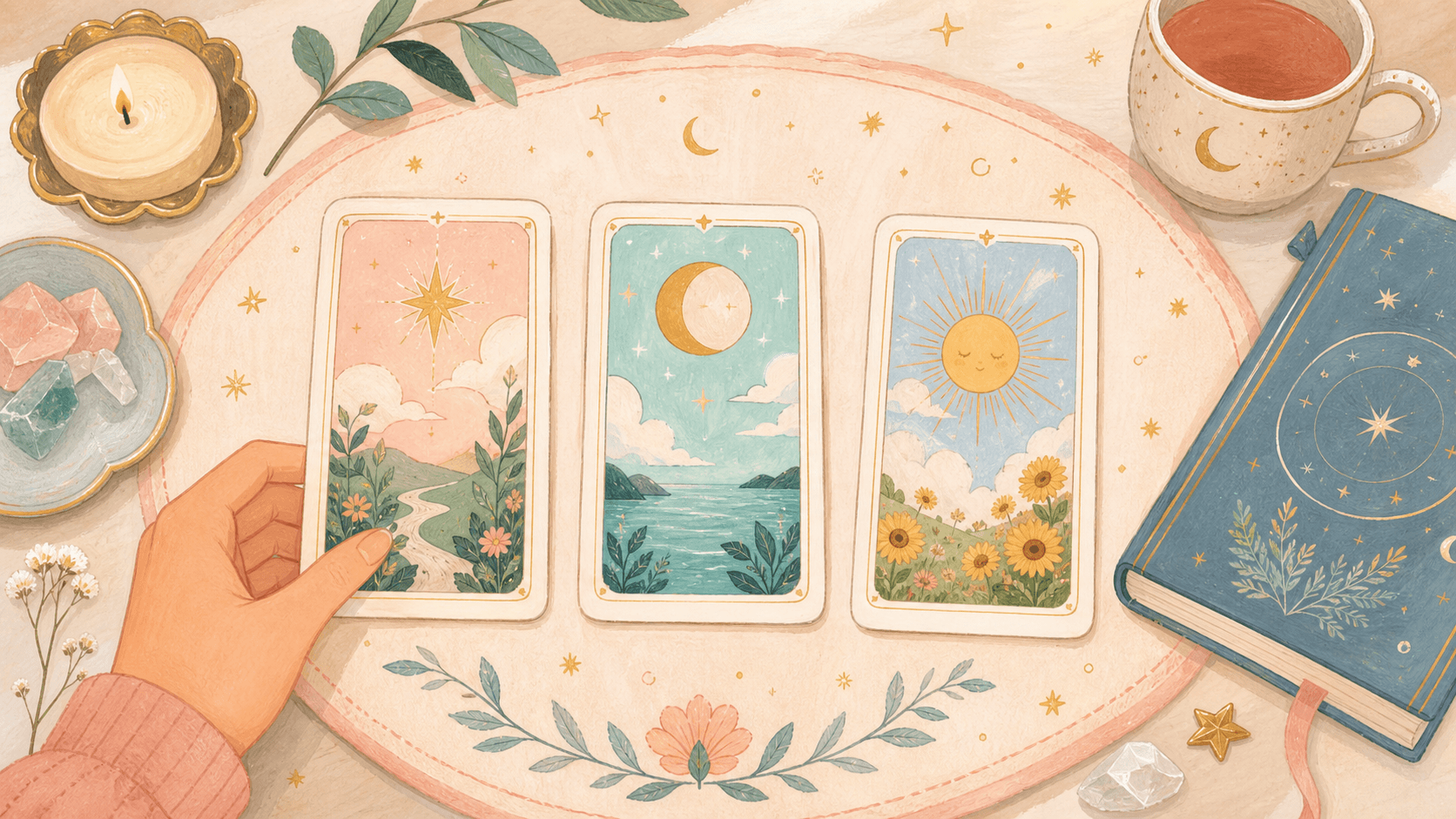
Once you're comfortable with the suits and a handful of Major Arcana cards, try your first spread. The easiest one to start with is past, present, future:
- Shuffle your deck while thinking of a question.
- Lay down three cards in a row.
- The first card reflects something from the past connected to your question, the second reflects where things stand now, and the third hints at where things are heading.
Read each card individually first, then see how they connect into a single narrative. That's really all a tarot reading is — a handful of images strung together into a story that makes sense of where you've been and where you might be going.
Give Yourself Time
Nobody reads tarot fluently after one afternoon. Go suit by suit, card by card, and let the meanings build on each other. The more you practice looking at the pictures instead of flipping to a definition, the faster the deck starts to feel like a language you actually speak — rather than one you're constantly translating.