Astrology · 4 min read
Reading the Room by Reading the Moon
Most people know their sun sign and maybe their moon sign, but far fewer people think about the moon as a tool they can actually use day to day. That's...
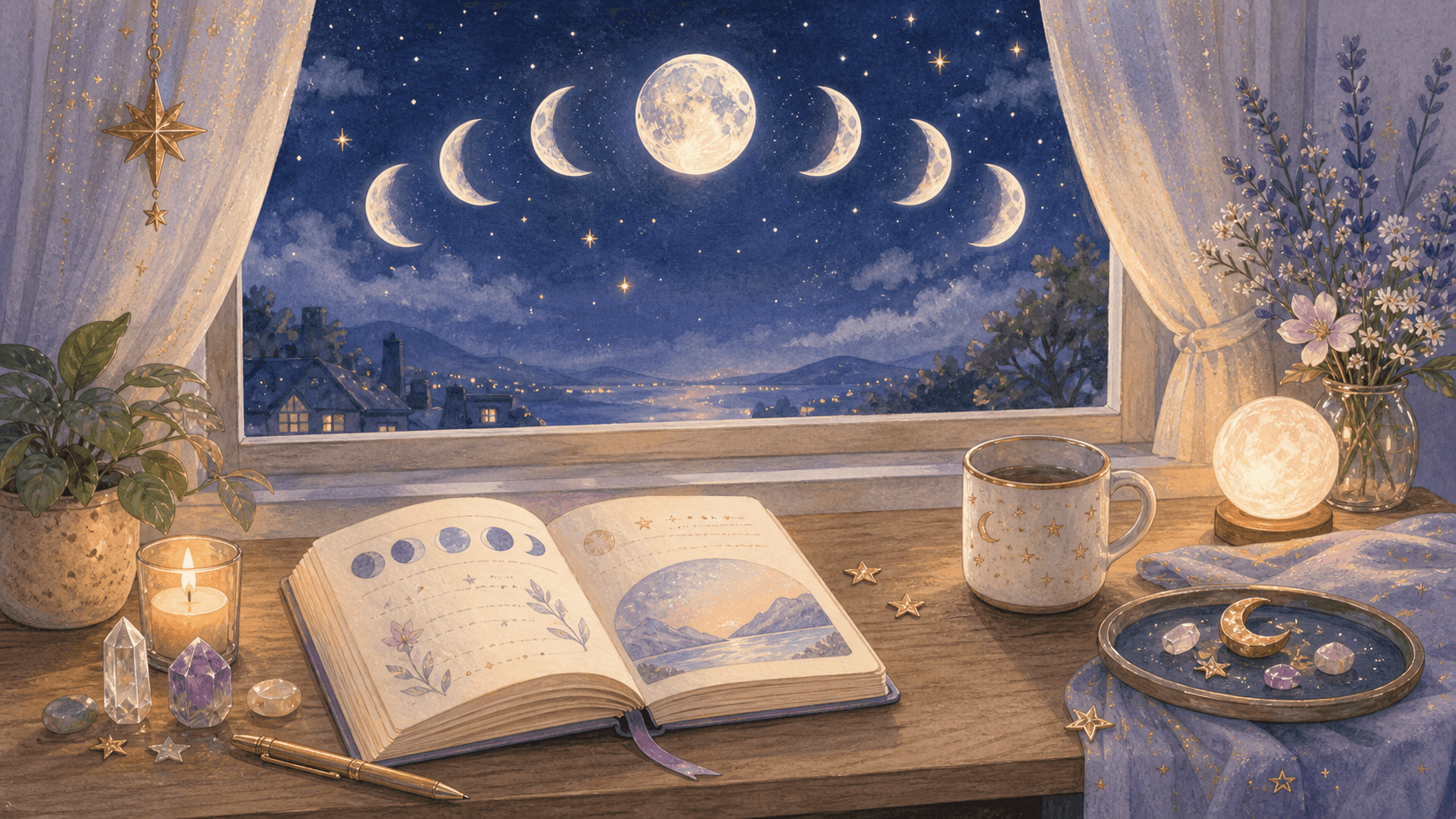
Most people know their sun sign and maybe their moon sign, but far fewer people think about the moon as a tool they can actually use day to day. That's a shame, because the lunar cycle is one of the simplest, most practical parts of astrology out there. You don't need a full birth chart or years of study to work with it. You just need to know what phase the moon is in and what that phase is generally good for.
Think of the moon's cycle as a built in rhythm running in the background of every month, one that moves through roughly the same eight beats every twenty nine and a half days. Once you learn that rhythm, you have a simple, repeatable way to decide when to start something, when to push forward, when to pull back, and when to just rest.
New Moon: Starting Something
The new moon is the moment the moon appears completely dark from our view, sitting close to the sun in the sky. Astrologically, it's treated as a blank slate, a fresh beginning before anything has taken shape yet.
This is generally considered the best time to plant seeds, literally or figuratively. Starting a new project, setting an intention, making a resolution, or simply deciding what you want more of in the coming weeks all tend to land well during a new moon. It's less about big dramatic action and more about quiet clarity: what do I actually want to grow this cycle?
Waxing Moon: Building Momentum
As the moon grows from that dark sliver toward fullness, astrologers call this the waxing phase. Energy here is generally seen as building, expanding, and moving forward.
This is a good stretch for taking action on whatever you set in motion at the new moon. Sending that email, starting the workout plan, pitching the idea, having the conversation. The waxing moon rewards momentum, so if you've been sitting on something, this is usually a more supportive window to actually act on it.
Full Moon: Illumination and Culmination
The full moon is the most talked about phase for good reason. This is when the moon sits directly opposite the sun, fully lit from our perspective, and it tends to correspond with things coming into full view, whether that's clarity, culmination, or heightened emotion.
Whatever was started at the new moon two weeks earlier often reaches some kind of peak or reveal now. It's a good time for noticing what's working, what's not, and what suddenly feels obvious that wasn't before. Full moons also tend to bring things to a head emotionally, so don't be surprised if this period feels a little more intense or revealing than usual.
Waning Moon: Releasing and Refining
After the full moon, the light starts to shrink again as the moon moves toward its next dark phase. This waning period is generally treated as a time for letting go, refining, and clearing out whatever no longer serves the intention you set.
This is a great stretch for editing rather than creating. Cutting things from your schedule, ending something that's run its course, decluttering a space, or simply stepping back from a project to see it more clearly. Where the waxing moon says go, the waning moon says simplify.
Dark Moon: Resting
In the final day or two before the next new moon, the sky goes dark again. Some astrologers separate this out from the new moon itself and call it the dark moon or balsamic phase. It's treated as a natural pause, a moment to rest before the next cycle begins.
This is a good time to slow down, reflect on the past month, and resist the urge to start anything new just yet. Save the next fresh start for the actual new moon a day or two later.
Using This Without Overcomplicating It
You don't need to track every micro phase or memorize exact degrees to make this useful. A simple lunar calendar app or calendar note is enough. The real value comes from asking yourself one question at each phase: given where the moon is right now, is this a moment to start, build, notice, release, or rest?
Over time, this becomes less like a rulebook and more like reading the room, except the room is the whole month, and the moon is quietly telling you which part of the conversation you're in.