
Numerology · 3 min read
What Your Personal Year Is Asking From You
Numerology has a lot to say about who you are at your core, but one of its most practical tools is actually about timing rather than personality. It's...
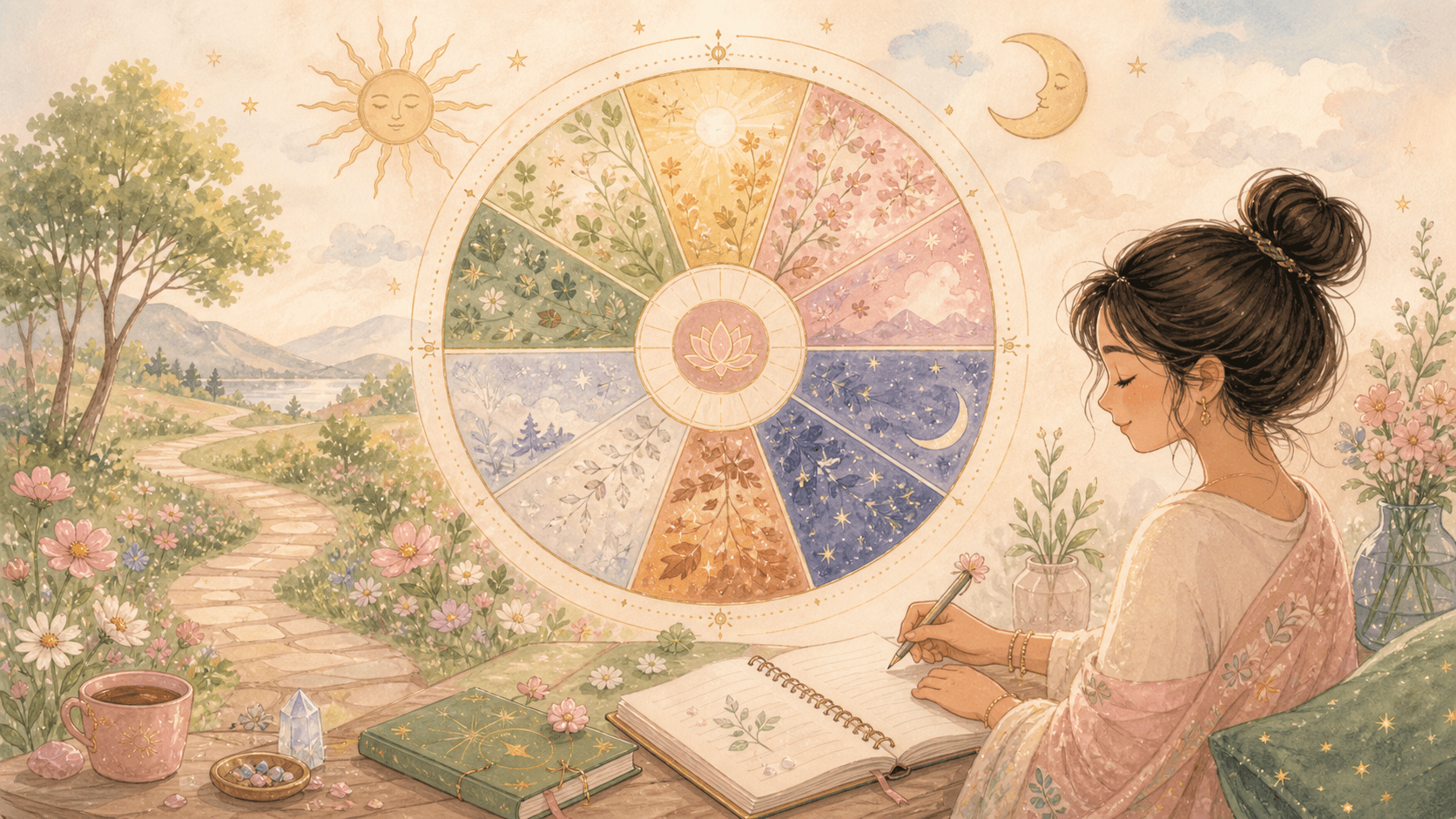
Numerology has a lot to say about who you are at your core, but one of its most practical tools is actually about timing rather than personality. It's called your personal year number, and once you know how to read it, you have a simple, grounded way to understand what a given year is generally supporting, without turning every decision into a source of pressure.
What a Personal Year Actually Is
Unlike your life path number, which stays fixed for life, your personal year shifts every year and moves through a repeating nine year cycle. Year one feels like a fresh start. Year nine feels like closure and release. Everything in between builds, develops, or deepens whatever began at the start of that cycle. Once you notice this pattern echoing across your own past years, it tends to become pretty hard to unsee.
How to Calculate It
The math here is simple. Take your birth month, your birth day, and the current calendar year, and add them all together. If the result is more than one digit, keep adding the digits together until you land on a single number between one and nine.
Say your birthday is May 21, and you want your personal year for 2026. You'd add 5 (for May) plus 21 (your birth day) plus 2, 0, 2, and 6 for the year. That gives you a total, which you then reduce by adding its digits together until only one digit remains. Whatever you land on, that's your personal year number for this cycle.
A few numerologists calculate this from birthday to birthday rather than from January to January, so if your number feels off partway through the year, it's worth trying both versions to see which one seems to match your actual experience.
What Each Year Tends to Support
Broadly speaking, here's the shape of the cycle:
Year one is about fresh starts. New chapters, new directions, and the energy of turning a page tend to show up strongly.
Years two and three are about developing whatever got started. Two often brings a slower, more relational pace, while three tends to bring more expression, creativity, and social energy.
Year four is about building structure. This is generally considered a grounding, practical stretch, better suited to steady effort than sudden leaps.
Year five shakes things up. Expect more change, movement, and unpredictability than usual.
Years six and seven deepen commitments and understanding, whether that's in relationships, responsibilities, or your own inner world.
Year eight tends to bring results, often tied to career, recognition, or tangible progress on what's been built so far.
Year nine is about release. Endings, letting go, and clearing space for the next cycle to begin all tend to cluster here.
Using This Without Turning It Into Pressure
Here's the part that matters most: none of this is meant to be a rulebook you have to follow perfectly. Knowing you're in a year four doesn't mean you're forbidden from starting something new, and knowing you're in a year one doesn't mean you have to force some dramatic reinvention on schedule.
Think of it more like knowing the season you're in. A farmer doesn't refuse to work in winter, but she also doesn't expect to harvest crops that haven't had time to grow yet. Your personal year works the same way. It's simply an honest read on the conditions you're currently working with, not a countdown you're failing to keep up with.
If you're in a year that's asking you to build quietly, you don't have to feel behind because nothing dramatic is happening yet. If you're in a year that's clearing things out, you don't have to panic about the losses along the way. The number is just giving you a bit more context for what's already unfolding, so you can work with the year instead of constantly pushing against it.